8.1 - Type II Equipment and Scope
Module: Type II High and Very-High-Pressure Appliances
Regulatory verification date: August 12, 2026
Primary authority: Current 40 CFR §§ 82.152 and 82.161, together with current Section 608 certification, test-topic, and Section 608/609 overlap requirements
Course role: Introduces the equipment families, certification boundaries, and classification logic needed before studying Type II pressure categories, leak detection, leak repair, recovery, evacuation, compressor service, and safety
Learning Objectives
After completing this section, a student should be able to:
- State the current regulatory scope of Type II technician certification.
- Explain why the common label Type II - High-Pressure is shorthand and why the current regulatory category also includes medium-pressure and very-high-pressure appliances.
- Identify common Type II equipment, including residential split systems, heat pumps, rooftop units, commercial refrigeration, supermarket refrigeration, and industrial-process refrigeration equipment.
- Explain why equipment size, building type, and refrigerant name alone do not determine Type II classification.
- Distinguish common Type II equipment from Type I small appliances.
- Distinguish common Type II equipment from Type III low-pressure appliances.
- Distinguish Type II stationary-equipment service from motor-vehicle air-conditioning (MVAC) service under Section 609.
- Explain the special certification pathway for MVAC-like appliances.
- Classify representative equipment using appliance type, factory configuration, cooling purpose, and refrigerant pressure category.
- Recognize which Type II details are intentionally reserved for later Module 8 sections.
Introduction
Module 7 focused on Type I small appliances. Type II covers a much broader group of refrigeration and air-conditioning systems commonly encountered in residential, commercial, institutional, and industrial work.
Representative examples include:
- Residential central split-system air conditioners.
- Residential and commercial heat pumps.
- Packaged rooftop units.
- Commercial split systems.
- Walk-in coolers and freezers.
- Supermarket refrigeration systems.
- Commercial cold-storage equipment.
- Many industrial-process refrigeration systems.
- Specialized very-high-pressure appliances.
However, the correct classification cannot be made from appearance alone.
A physically large appliance is not automatically Type II. A physically small appliance is not automatically Type I. A commercial appliance is not automatically Type II. A chiller is not automatically Type III. A system using a familiar high-pressure refrigerant is not automatically Type II if another regulatory category controls.
The basic Type II rule is:
Medium-, high-, or very-high-pressure appliance
+
Not a Type I small appliance
+
Not an MVAC
+
Covered maintenance, service, repair, or disposal activity
→ Type II certification
A special rule applies to MVAC-like appliances: they are not ordinary stationary Type II appliances, but a technician maintaining, servicing, or repairing them may qualify through either the Type II Section 608 pathway or the applicable Section 609 pathway.
This section establishes the equipment boundaries. Exact refrigerant pressure-category definitions are developed in Section 8.2 - Refrigerant Pressure Classifications.
Key Concepts
1. Current Type II Scope
Type II certification applies to persons who maintain, service, repair, or dispose of:
- Medium-pressure appliances.
- High-pressure appliances.
- Very-high-pressure appliances.
The ordinary Type II category excludes:
- Small appliances covered by Type I.
- Motor-vehicle air conditioners (MVACs) whose servicing requirements are addressed under Section 609.
- MVAC-like appliances from the ordinary Type II appliance category, although Type II certification is one permitted certification pathway for servicing MVAC-like equipment.
The common examination label Type II - High-Pressure is therefore useful shorthand, but it should not cause the student to forget that the current regulatory wording includes medium-, high-, and very-high-pressure appliances.
2. Pressure Category Controls More Than Physical Size
A useful first correction is:
Large equipment
≠
automatically Type II
and:
Small-looking equipment
≠
automatically Type I
Certification depends on the regulatory appliance category.
For example:
- A large supermarket refrigeration rack is commonly Type II.
- A residential split system with only a few pounds of refrigerant is commonly Type II because it is field connected and does not satisfy the small-appliance definition.
- A large low-pressure centrifugal chiller is Type III, not Type II.
- A factory-manufactured, factory-charged, factory-hermetically-sealed commercial refrigerator containing 5 lb or less may qualify as a Type I small appliance even though it is used commercially.
The correct approach is to classify the appliance rather than judge its size.
3. Residential Split-System Air Conditioners
A typical residential split-system air conditioner contains:
- An outdoor condensing unit.
- An indoor evaporator coil or air-handling unit.
- Field-connected refrigerant piping.
- Service valves and service fittings.
- A refrigerant charge established or adjusted during installation and service.
Because the indoor and outdoor refrigerant circuits are connected in the field, an ordinary residential split system does not satisfy the factory-sealed small-appliance definition merely because its charge is 5 lb or less.
For common refrigerants in the medium- or high-pressure categories, this equipment is serviced under Type II.
Mini-Split and Multi-Split Systems
A field-connected mini-split or multi-split system is also normally treated as Type II when its refrigerant falls within the Type II pressure categories.
The following shortcut is incorrect:
Small outdoor unit
+
small refrigerant charge
→ Type I
The presence of field-connected refrigerant lines is an important classification clue.
4. Heat Pumps
A heat pump uses the vapor-compression refrigeration cycle for both heating and cooling by reversing refrigerant flow through the indoor and outdoor heat exchangers.
The reversing function does not create a separate EPA certification category.
A field-connected residential or commercial heat pump using a medium-, high-, or very-high-pressure refrigerant is normally Type II.
Do not confuse this equipment with a packaged terminal heat pump that satisfies the complete small-appliance definition. A qualifying packaged terminal heat pump can be Type I.
Therefore:
Heat pump
≠
automatic Type II
The appliance construction and pressure category still control.
5. Packaged Rooftop Units
Packaged rooftop units are common Type II equipment.
A rooftop unit may contain:
- Compressor or multiple compressors.
- Air-cooled condenser.
- Evaporator coil.
- Metering device.
- Fans and air-handling components.
- Heating components in combination HVAC units.
- Refrigerant piping and service access points.
Many rooftop units are used for comfort cooling in commercial buildings.
Typical applications include:
- Retail stores.
- Restaurants.
- Schools.
- Offices.
- Warehouses.
- One-story commercial buildings.
The rooftop location itself does not make the appliance Type II. It is Type II when the refrigerant pressure category and appliance classification fall within Type II.
6. Commercial Refrigeration
Commercial refrigeration is an application category involving refrigeration equipment used in the retail-food and cold-storage sectors.
Representative examples include refrigeration equipment in:
- Supermarkets.
- Convenience stores.
- Restaurants.
- Food-service facilities.
- Cold-storage warehouses.
Representative Type II commercial refrigeration equipment includes:
- Walk-in coolers.
- Walk-in freezers.
- Reach-in cases that do not meet the small-appliance definition.
- Display cases connected to remote condensing systems.
- Remote condensing units.
- Refrigeration racks.
- Cold-storage systems.
A commercial-use label alone does not establish Type II. Some factory-sealed commercial refrigerators or freezers can still qualify as Type I small appliances when they meet the complete small-appliance definition.
7. Supermarket Refrigeration
Supermarket refrigeration is a major Type II application because supermarkets may use multiple refrigeration systems serving:
- Frozen-food cases.
- Dairy cases.
- Meat cases.
- Produce cases.
- Walk-in coolers.
- Walk-in freezers.
- Food-preparation areas.
A supermarket may use:
- One or more remote condensing units.
- Parallel compressor racks.
- Multiple evaporators.
- Receivers.
- Long liquid and suction lines.
- Isolation valves.
- Distributed refrigeration arrangements.
These features make refrigerant identification, isolation, recovery access, and cross-contamination control especially important.
The detailed Type II recovery implications are reserved for Sections 8.6 and 8.7.
8. Industrial-Process Refrigeration
Industrial-process refrigeration refers to complex, customized refrigeration appliances directly linked to industrial processes.
Representative applications include:
- Chemical manufacturing.
- Pharmaceutical manufacturing.
- Petrochemical processing.
- Manufacturing processes.
- Industrial ice machines.
- Refrigeration used directly in electricity generation.
- Ice rinks.
When one appliance serves both industrial-process refrigeration and another purpose, it is classified as industrial-process refrigeration for the applicable regulatory framework when 50% or more of its operating capacity is used for the industrial-process refrigeration application.
Industrial-process refrigeration is an application classification, not by itself a Type II pressure classification.
Therefore:
Industrial-process refrigeration
+
medium/high/very-high pressure
→ Type II
but:
Industrial-process application
+
low-pressure appliance
→ Type III pressure category controls
This distinction becomes especially important when leak-repair rules are discussed in Section 8.5.
9. Very-High-Pressure Appliances
Type II also includes very-high-pressure appliances.
Very-high-pressure equipment is less common in ordinary residential service but remains part of Type II certification.
The important lesson in this section is not to memorize individual pressure thresholds yet. Instead, remember:
Very-high-pressure appliance
→ Type II
unless another specific exclusion or equipment category applies.
Exact very-high-pressure definitions, refrigerant examples, and the saturation-pressure classification method are covered in Section 8.2.
10. Type I Small Appliances Are Excluded From Ordinary Type II Scope
A Type I small appliance must be:
- Fully manufactured at a factory.
- Charged at a factory.
- Hermetically sealed at a factory.
- Charged with 5 lb or less of refrigerant.
If all conditions are satisfied, Type I controls for maintenance, service, and repair.
This creates several important Type II boundary cases.
| Equipment | Likely Category | Why |
|---|---|---|
| Factory-sealed household refrigerator | Type I | Listed small-appliance example when definition is met |
| Factory-sealed commercial refrigerator with 5 lb or less | Evaluate as Type I | Commercial use does not automatically make it Type II |
| Residential split system with 4 lb | Type II in common applications | Field-connected system; charge alone does not make it Type I |
| Walk-in cooler | Commonly Type II | Field-installed commercial refrigeration system |
| Packaged terminal heat pump meeting small-appliance definition | Type I | Specifically within small-appliance framework |
| Field-connected residential heat pump | Commonly Type II | Does not satisfy factory-sealed small-appliance definition |
Detailed Type I boundaries are reviewed in Section 7.2 - Type I Exclusions and Boundary Cases.
11. Low-Pressure Appliances Are Type III
Type II does not include low-pressure appliances.
A common example is a low-pressure centrifugal chiller.
This is a critical examination distinction because a large commercial or industrial chiller may look like equipment that belongs in Type II, but the refrigerant pressure category can make it Type III.
Therefore:
Large commercial equipment
≠
automatic Type II
and:
Low-pressure appliance
→ Type III
Detailed low-pressure procedures are reserved for Module 9.
12. MVACs Are Not Ordinary Type II Appliances
A motor-vehicle air conditioner (MVAC) is mechanical vapor-compression refrigeration equipment used to cool the driver’s or passenger’s compartment of a motor vehicle.
Service and repair of an MVAC are addressed under Section 609, not by ordinary Type II stationary-equipment certification.
A technician should therefore not use this shortcut:
High-pressure refrigerant
→ Type II
without first checking whether the appliance is an MVAC.
For example, a passenger-car air conditioner can use a refrigerant that would otherwise appear to be a high-pressure refrigerant, but the equipment is still an MVAC and its service requirements follow the Section 609 pathway.
13. MVAC-Like Appliances Are a Special Boundary Case
An MVAC-like appliance is a specific category of open-drive mechanical vapor-compression equipment used to cool the driver or passenger compartment of qualifying off-road vehicles or equipment.
Examples can include qualifying air-conditioning systems on:
- Agricultural equipment.
- Construction equipment.
- Other off-road equipment.
For maintenance, service, or repair of an MVAC-like appliance, a technician may qualify through either:
- Section 608 Type II certification, or
- The applicable Section 609 certification pathway.
Therefore, an MVAC-like appliance should not simply be described as an ordinary stationary Type II appliance. Instead, remember the special certification choice:
MVAC-like appliance service
→ Type II OR Section 609 pathway
14. Refrigerated-Cargo Equipment Is Not Automatically an MVAC
A refrigeration system mounted on a vehicle is not automatically an MVAC.
The key question is what the system cools.
- Cooling the driver/passenger compartment can place the equipment in the MVAC or MVAC-like framework.
- Cooling cargo or a refrigerated load space is not the same function as an MVAC.
A refrigerated truck or trailer cargo system is therefore evaluated under the Section 608 appliance framework rather than being classified as an MVAC solely because it is vehicle mounted.
If that cargo refrigeration appliance falls within the medium-, high-, or very-high-pressure categories and does not meet the Type I small-appliance definition, Type II is the applicable Section 608 certification category.
15. Refrigerant Name Alone Does Not Determine Type II
A refrigerant designation is important because refrigerant properties determine the pressure category, safety considerations, pressure-temperature relationship, lubricant compatibility, and service procedure.
However, the technician must not use a refrigerant name as the only classification test.
For example:
- The same broad refrigerant family can appear in different equipment applications.
- MVAC service remains within Section 609 even when the refrigerant pressure appears similar to a stationary Type II refrigerant.
- A small appliance remains Type I when it satisfies the small-appliance definition.
- A low-pressure appliance remains Type III.
The better sequence is:
Identify equipment and application
→ Check exclusions and special categories
→ Determine refrigerant pressure category
→ Select certification type
16. Type II Includes Disposal of Covered Appliances
Type II certification covers maintenance, service, repair, and disposal of medium-, high-, and very-high-pressure appliances within the Type II category.
This differs from the special technician-certification exception that applies solely to disposal of:
- Small appliances.
- MVACs.
- MVAC-like appliances.
The disposal exception does not eliminate refrigerant-recovery or safe-disposal responsibilities.
Detailed safe-disposal requirements are covered in Section 6.9 - Safe Disposal Requirements.
Technical and Regulatory Details
1. Type II Classification Decision Process
Use the following sequence when a question asks which certification applies.
Step 1 - Is the Equipment an MVAC?
If the system is an MVAC, ordinary Type II stationary-equipment service does not control.
For service or repair within the MVAC framework, apply the applicable Section 609 requirements.
Step 2 - Is It an MVAC-Like Appliance?
If yes, remember the special pathway:
Type II OR applicable Section 609 certification
for maintenance, service, or repair.
Step 3 - Does It Meet the Small-Appliance Definition?
Check all four conditions:
- Factory manufactured.
- Factory charged.
- Factory hermetically sealed.
- 5 lb or less of refrigerant.
If all are satisfied, Type I generally controls maintenance, service, and repair.
Step 4 - Is It Low Pressure?
If the appliance falls within the low-pressure category:
Type III
Step 5 - Is It Medium, High, or Very High Pressure?
If the appliance is not excluded by the earlier steps and falls within one of these categories:
Type II
Step 6 - Confirm the Activity
For Type II equipment, covered activities include:
- Maintenance.
- Service.
- Repair.
- Disposal.
Installation activities that can reasonably violate the refrigerant circuit also require appropriate technician certification, as developed in Section 1.2.
2. Type II Equipment Recognition Table
| Equipment | Common Type II Status | Classification Reminder |
|---|---|---|
| Residential central split-system A/C | Common Type II | Field-connected; pressure category controls |
| Residential mini-split | Common Type II | Small physical size or low charge does not make it Type I |
| Residential split heat pump | Common Type II | Field-connected system; reversing cycle does not change certification |
| Commercial split system | Common Type II | Typical comfort-cooling application |
| Packaged rooftop unit | Common Type II | Rooftop location alone is not the legal classification |
| Walk-in cooler | Common Type II | Field-installed commercial refrigeration |
| Walk-in freezer | Common Type II | Field-installed commercial refrigeration |
| Supermarket compressor rack | Common Type II | Commercial refrigeration; often multiple circuits/components |
| Remote supermarket display system | Common Type II | Remote field-connected refrigeration |
| Cold-storage warehouse refrigeration | Common Type II | Commercial refrigeration if pressure category is Type II |
| Industrial-process refrigeration | Often Type II | Application category does not replace pressure classification |
| Specialized very-high-pressure system | Type II | Very-high-pressure category is included |
| Factory-sealed refrigerator with ≤5 lb | Type I when full definition is met | Commercial or residential use does not override small-appliance definition |
| Low-pressure centrifugal chiller | Type III | Pressure category controls |
| Passenger-car A/C | Section 609 service framework | MVAC exclusion |
| Qualifying off-road MVAC-like system | Type II or Section 609 pathway | Special certification option |
| Refrigerated cargo system | Evaluate under Section 608 | If not a small appliance and medium/high/very-high pressure, Type II |
3. Application Category Versus Pressure Category
Students should keep two separate questions in mind:
Question A - What is the equipment used for?
Possible application descriptions include:
- Comfort cooling.
- Commercial refrigeration.
- Industrial-process refrigeration.
- Cargo refrigeration.
- Motor-vehicle passenger-compartment cooling.
Question B - What pressure category applies to the appliance?
Possible categories include:
- Low pressure.
- Medium pressure.
- High pressure.
- Very high pressure.
The application description and pressure classification are related but are not identical.
For example:
- A packaged rooftop comfort-cooling unit is commonly Type II.
- A low-pressure comfort-cooling chiller is Type III.
- An industrial-process refrigeration appliance may be Type II when its refrigerant pressure category falls within medium, high, or very high pressure.
4. Public Shorthand Versus Precise Regulatory Wording
The common examination heading is:
Type II - High-Pressure
For precise classification, remember:
Type II
=
medium pressure
+
high pressure
+
very high pressure
subject to the applicable exclusions and special cases.
The exact pressure ranges and refrigerant examples are intentionally reserved for Section 8.2 so that this section remains focused on equipment scope and boundaries.
5. Type II Does Not Replace Other Requirements
Holding Type II certification does not by itself mean that a technician is qualified or legally authorized to perform every task associated with the appliance.
The technician must still follow applicable:
- Manufacturer service procedures.
- Refrigerant-specific safety requirements.
- Electrical safety requirements.
- Recovery-equipment requirements.
- Cylinder requirements.
- Building and mechanical codes.
- State and local licensing requirements.
- Employer procedures.
Type II identifies the Section 608 certification category for the covered refrigerant work. It is not a complete trade license or manufacturer qualification.
Important Terms
Comfort Cooling
Comfort cooling refers to air-conditioning appliances used to control heat and/or humidity in occupied facilities such as residential, office, and commercial buildings.
A comfort-cooling label does not by itself establish Type II because some comfort-cooling equipment can fall within another pressure category.
Commercial Refrigeration
Commercial refrigeration refers to refrigeration appliances used in retail-food and cold-storage warehouse sectors, including equipment used in supermarkets, convenience stores, restaurants, food-service establishments, and facilities storing perishable goods.
High-Pressure Appliance
A high-pressure appliance is an appliance falling within the current high-pressure refrigerant category. High-pressure appliances are included under Type II certification unless a specific exclusion applies.
The exact pressure range is covered in Section 8.2.
Industrial-Process Refrigeration
Industrial-process refrigeration refers to complex customized refrigeration appliances directly linked to industrial processes, including qualifying chemical, pharmaceutical, petrochemical, manufacturing, industrial ice, electricity-generation, and ice-rink applications.
Medium-Pressure Appliance
A medium-pressure appliance is an appliance falling within the current medium-pressure refrigerant category. Medium-pressure appliances are included under Type II certification unless a specific exclusion applies.
The exact pressure range is covered in Section 8.2.
Motor-Vehicle Air Conditioner
A motor-vehicle air conditioner (MVAC) is mechanical vapor-compression refrigeration equipment used to cool the driver’s or passenger’s compartment of a motor vehicle. MVAC service is addressed through Section 609 rather than ordinary Type II stationary-equipment service.
MVAC-Like Appliance
An MVAC-like appliance is a qualifying open-drive mechanical vapor-compression appliance used to cool the driver’s or passenger’s compartment of off-road vehicles or equipment. Service may be performed by a technician certified through the Type II or applicable Section 609 pathway.
Small Appliance
A small appliance is fully manufactured, charged, and hermetically sealed at a factory with 5 lb or less of refrigerant. Type I applies to maintenance, service, and repair of small appliances.
Type II Technician
A Type II technician is certified for covered work on medium-, high-, and very-high-pressure appliances within the Type II scope, subject to the exclusions and special pathways described in this section.
Very-High-Pressure Appliance
A very-high-pressure appliance is an appliance falling within the current very-high-pressure refrigerant category. Very-high-pressure appliances are included under Type II certification.
The exact definition and examples are covered in Section 8.2.
Figures and Diagrams
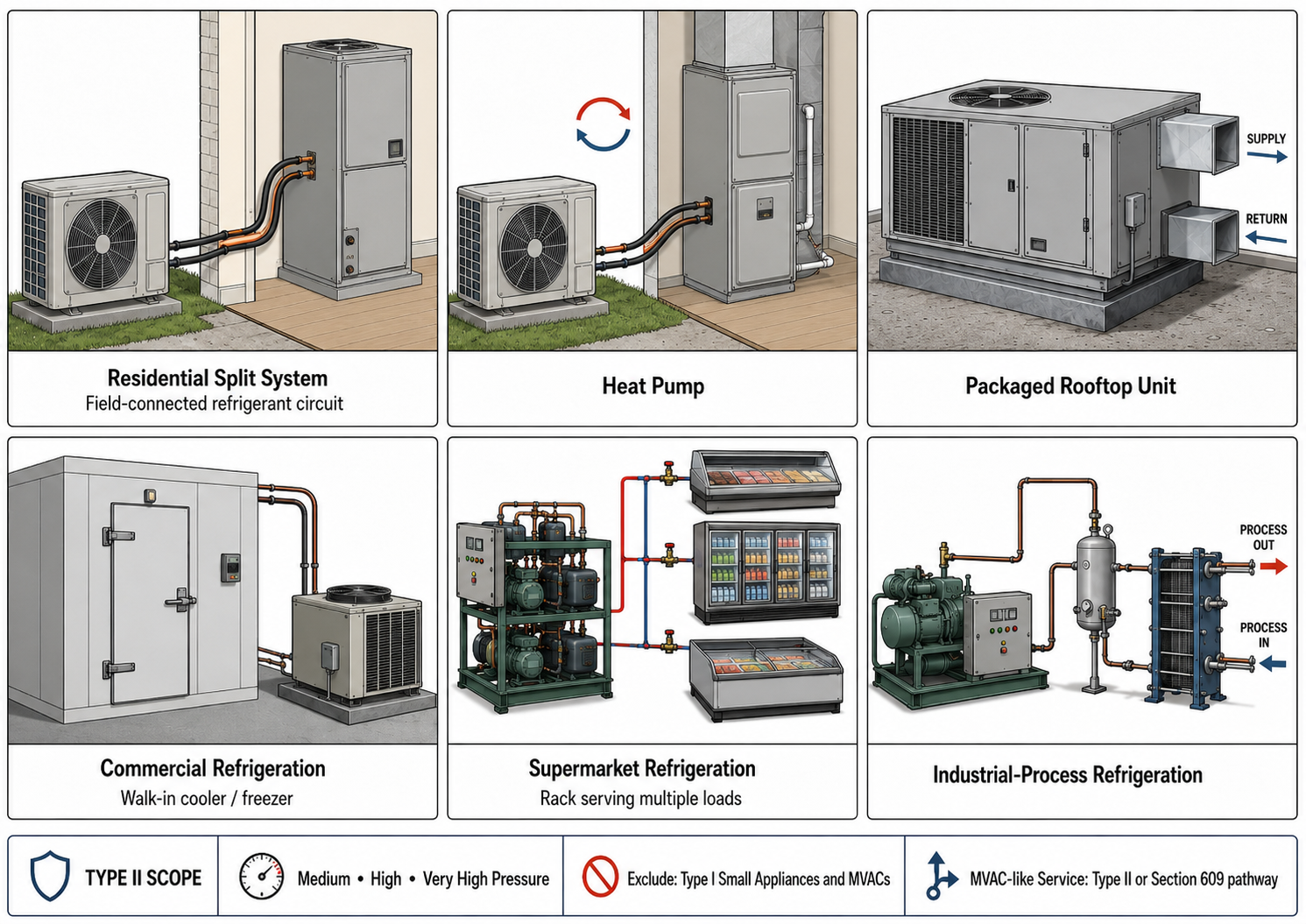
Figure 8.1.1 - Representative Type II equipment and the principal scope boundaries used for classification.
AI-generated instructional figure: It may contain visual inaccuracies. Use the accompanying lesson text and cited authoritative sources to verify technical and regulatory details.
EPA 608 Exam Focus
What Students Must Remember
- Type II covers medium-, high-, and very-high-pressure appliances within the regulatory Type II scope.
- The common label Type II - High-Pressure is shorthand; do not forget medium-pressure appliances.
- Residential central split systems are common Type II equipment.
- Field-connected mini-splits are commonly Type II, not Type I merely because they are physically small or have a small charge.
- Field-connected residential and commercial heat pumps are common Type II equipment.
- Packaged rooftop units are common Type II equipment.
- Walk-ins, remote commercial refrigeration, supermarket racks, and many cold-storage systems are common Type II equipment.
- Many industrial-process refrigeration systems are Type II, but the application name does not replace pressure classification.
- Small appliances are excluded from ordinary Type II scope.
- A commercial appliance can still be Type I if it satisfies the complete small-appliance definition.
- Low-pressure appliances are Type III.
- MVAC service is addressed under Section 609 rather than ordinary Type II stationary service.
- MVAC-like appliances have a special service pathway: Type II or applicable Section 609 certification.
- Refrigerated-cargo systems are not MVACs merely because they are mounted on vehicles.
- Equipment size, building type, and refrigerant name alone do not determine certification.
- Type II includes disposal of covered medium-, high-, and very-high-pressure appliances.
High-Priority Classification Sequence
1. MVAC?
   → Section 609 service framework

2. MVAC-like?
   → Type II or Section 609 pathway

3. Small appliance?
   → Type I

4. Low pressure?
   → Type III

5. Medium / high / very high pressure?
   → Type II
Typical Exam Question Patterns
Students may be asked to:
- Select the correct certification for a residential split system.
- Distinguish a field-connected mini-split from a Type I small appliance.
- Identify a rooftop unit as a common Type II appliance.
- Distinguish commercial refrigeration from a factory-sealed commercial small appliance.
- Identify supermarket rack refrigeration as a typical Type II application.
- Recognize industrial-process refrigeration as an application category that still requires pressure classification.
- Identify a low-pressure chiller as Type III rather than Type II.
- Recognize that MVACs are not ordinary Type II appliances.
- Select either Type II or Section 609 as the permitted certification pathway for MVAC-like service.
- Identify refrigerated cargo as distinct from passenger-compartment MVAC cooling.
- Recognize that very-high-pressure appliances are included under Type II.
Fast Recognition Table
| Exam Clue | Most Likely Classification Direction |
|---|---|
| Residential central split system | Type II |
| Field-connected mini-split | Type II |
| Residential split heat pump | Type II |
| Packaged rooftop unit | Type II |
| Walk-in cooler or freezer | Type II |
| Supermarket compressor rack | Type II |
| Industrial-process refrigeration using a Type II pressure-category refrigerant | Type II |
| Factory-sealed appliance meeting all small-appliance conditions | Type I |
| Low-pressure centrifugal chiller | Type III |
| Passenger-car A/C service | Section 609 |
| Qualifying MVAC-like equipment | Type II or Section 609 |
| Refrigerated cargo unit | Section 608 classification; Type II if not a small appliance and pressure category is medium/high/very high |
Common Mistakes and Confusing Points
Mistake 1: Treating the Module Title as the Complete Regulatory Definition
The module uses the familiar high- and very-high-pressure wording, but current Type II regulatory scope also includes medium-pressure appliances.
Mistake 2: Assuming Every Commercial Appliance Is Type II
A factory-manufactured, factory-charged, factory-hermetically-sealed commercial refrigerator with 5 lb or less can qualify as a Type I small appliance.
Mistake 3: Assuming Five Pounds or Less Means Type I
A field-connected split system may contain 5 lb or less and still be Type II.
Mistake 4: Assuming Every Heat Pump Is Type II
A field-connected heat pump is commonly Type II, but a packaged terminal heat pump that satisfies the small-appliance definition can be Type I.
Mistake 5: Assuming Every Chiller Is Type III
The word chiller does not by itself determine certification. Pressure category controls.
Mistake 6: Assuming Every Large System Is Type II
A large low-pressure appliance is Type III.
Mistake 7: Classifying From Refrigerant Name Alone
The technician must also identify the appliance type and check special categories such as small appliances, MVACs, and MVAC-like appliances.
Mistake 8: Calling an MVAC a Type II Appliance Because It Uses a High-Pressure Refrigerant
Passenger-compartment MVAC service is addressed under Section 609.
Mistake 9: Treating MVAC-Like Equipment as Completely Outside Type II
MVAC-like equipment is a special category for which Type II certification is one permitted service pathway.
Mistake 10: Treating Every Vehicle-Mounted Refrigeration System as an MVAC
Refrigerated-cargo systems cool cargo rather than the driver/passenger compartment and are evaluated under the Section 608 appliance framework.
Mistake 11: Assuming Industrial-Process Refrigeration Automatically Means Type II
Industrial-process refrigeration describes the application. The appliance’s refrigerant pressure category still determines Type II versus Type III.
Mistake 12: Forgetting That Type II Covers Disposal
For covered Type II appliances, the certification scope includes disposal as well as maintenance, service, and repair.
Concept-Check Questions
Question 8.1-1
Which statement best describes the current Type II certification scope?
A. Type II applies only to high-pressure appliances containing more than 50 lb of refrigerant.
B. Type II applies to medium-, high-, and very-high-pressure appliances within the Type II scope, except specified categories such as small appliances and MVACs.
C. Type II applies to all commercial refrigeration equipment regardless of appliance classification.
D. Type II applies only to residential split systems.
Question 8.1-2
A field-connected residential split-system air conditioner contains 4 lb of refrigerant. Which classification is most appropriate for a common medium- or high-pressure system?
A. Type I, because the charge is below 5 lb
B. Type II, because the field-connected system does not become a small appliance solely from its charge
C. Type III, because all split systems are low pressure
D. Section 609, because the system has an outdoor unit
Question 8.1-3
Which appliance is MOST clearly a common Type II example?
A. A factory-sealed household refrigerator
B. A low-pressure centrifugal chiller
C. A packaged rooftop air-conditioning unit using a Type II pressure-category refrigerant
D. A passenger-car air conditioner
Question 8.1-4
Which statement about commercial refrigeration is correct?
A. Every commercial refrigerator is automatically Type II.
B. Commercial refrigeration can include supermarket and cold-storage equipment, but the appliance classification and pressure category still control certification.
C. Commercial refrigeration is always Type III.
D. Commercial refrigeration is governed only by Section 609.
Question 8.1-5
A technician will service a qualifying MVAC-like air-conditioning system on off-road equipment. Which certification pathway is permitted?
A. Type I only
B. Type III only
C. Type II or the applicable Section 609 pathway
D. No refrigerant certification is required
Question 8.1-6
Why is a low-pressure centrifugal chiller not classified as Type II merely because it is large commercial equipment?
A. Type II applies only to residential equipment.
B. Physical size does not control; the low-pressure category places the appliance under Type III.
C. Chillers are exempt from Section 608.
D. Any appliance in a mechanical room is Section 609 equipment.
Question 8.1-7
Which statement best describes industrial-process refrigeration in Type II classification?
A. The phrase industrial-process refrigeration automatically makes every appliance Type II.
B. Industrial-process refrigeration is an application category; a medium-, high-, or very-high-pressure appliance is Type II, while a low-pressure appliance remains Type III.
C. Industrial-process refrigeration is always Type I when the appliance is factory built.
D. Industrial-process refrigeration is outside Section 608.
Question 8.1-8
A refrigeration system mounted on a truck cools only the cargo compartment. Which statement is most accurate?
A. It is automatically an MVAC because it is mounted on a vehicle.
B. It is automatically a Type I small appliance.
C. It is evaluated under the Section 608 appliance framework; if it does not meet the small-appliance definition and its pressure category is medium, high, or very high, Type II applies.
D. It is always Type III.
Answers and detailed explanations will be provided in
8.15 - Answers and Explanations.md.
Section Summary
Type II is the Section 608 certification category associated with covered medium-, high-, and very-high-pressure appliances.
Common Type II equipment includes:
- Residential central split-system air conditioners.
- Field-connected mini-splits.
- Residential and commercial heat pumps.
- Packaged rooftop units.
- Walk-in coolers and freezers.
- Remote commercial refrigeration.
- Supermarket refrigeration systems.
- Cold-storage systems.
- Many industrial-process refrigeration systems.
- Specialized very-high-pressure appliances.
The key classification method is:
Identify the equipment and cooling purpose
→ Check MVAC / MVAC-like status
→ Check the complete small-appliance definition
→ Determine pressure category
→ Select Type I, Type II, Type III, or Section 609 pathway
The most important boundaries are:
- Small appliance → Type I for maintenance, service, and repair.
- Medium-, high-, or very-high-pressure stationary appliance within scope → Type II.
- Low-pressure appliance → Type III.
- MVAC service → Section 609 framework.
- MVAC-like service → Type II or Section 609 pathway.
- Refrigerated cargo → Section 608 appliance classification; Type II when it is not a Type I small appliance and the pressure category falls within Type II.
Do not classify equipment only by:
- Physical size.
- Building type.
- Commercial versus residential use.
- Refrigerant charge alone.
- Refrigerant name alone.
- Whether the appliance is mounted on a vehicle.
The next section develops the exact medium-, high-, very-high-, and low-pressure refrigerant classifications used to separate Type II from Type III and to interpret later Type II recovery and evacuation requirements.
See Section 8.2 - Refrigerant Pressure Classifications.
References
Current Regulatory and EPA Sources
-
Electronic Code of Federal Regulations, 40 CFR § 82.152 - Definitions, current definitions of appliance, comfort cooling, commercial refrigeration, industrial-process refrigeration, low-, medium-, high-, and very-high-pressure appliances, small appliance, MVAC-like appliance, refrigerant circuit, and technician. Accessed August 12, 2026.
-
Electronic Code of Federal Regulations, 40 CFR § 82.161 - Technician Certification, current Type I, Type II, Type III, Universal, MVAC-like, and MVAC certification requirements. Accessed August 12, 2026.
-
U.S. Environmental Protection Agency, Section 608 Technician Certification Requirements, current public certification categories and Type II high-/very-high-pressure shorthand. Accessed August 12, 2026.
-
U.S. Environmental Protection Agency, Test Topics - Section 608 Technician Certification, current Type II topic framework for leak detection, recovery, refrigeration components, pressure-temperature relationships, and safety. Accessed August 12, 2026.
-
U.S. Environmental Protection Agency, Definitions of Section 608 Terms, current plain-language definitions of small appliance, technician, and refrigerant circuit. Accessed August 12, 2026.
-
U.S. Environmental Protection Agency, Section 608 and Section 609 Overlap, current distinction among stationary equipment, MVACs, and MVAC-like appliances and the Type II/Section 609 service pathway for MVAC-like appliances. Accessed August 12, 2026.
-
Electronic Code of Federal Regulations, 40 CFR § 82.32 - Definitions, current MVAC definition excluding hermetically sealed refrigeration systems used on motor vehicles for refrigerated cargo. Accessed August 12, 2026.