5.8 - Standing Vacuum Test and Triple Evacuation
Module: Recovery Recycling Reclaiming Evacuation and Dehydration
Regulatory verification date: August 9, 2026
Primary authority: Current EPA Section 608 requirements and current manufacturer technical guidance for evacuation and vacuum testing
Course role: Explains how to evaluate vacuum decay after isolating the vacuum pump, distinguish likely moisture/outgassing behavior from a likely leak, and use dry-nitrogen breaks and triple evacuation when deeper dehydration is needed
Learning Objectives
After completing this section, a student should be able to:
- Define a standing vacuum test or vacuum decay test and explain why the vacuum pump must be isolated before the system is evaluated.
- Interpret common vacuum-decay patterns and distinguish a likely tight/dry system from likely moisture/outgassing or a likely leak.
- Explain why the required isolation time and acceptable micron rise are normally specified by the equipment manufacturer rather than by one universal EPA value.
- Explain the purpose of a dry-nitrogen break during dehydration and why nitrogen must be removed before final charging.
- Describe the general sequence and purpose of triple evacuation without treating one manufacturer’s micron targets or nitrogen pressure as a universal rule.
- Distinguish a vacuum pump from a refrigerant recovery machine and recognize the limited Type I system-dependent context in which a vacuum pump may be part of a refrigerant-recovery arrangement.
Introduction
Section 5.7 explained how a vacuum pump removes air and water vapor from a refrigeration system.
Reaching a low micron reading while the pump is running is only part of the job.
The technician must also determine whether the system itself can maintain an acceptable vacuum after the pump is isolated.
That process is commonly called a:
Standing vacuum test
or:
Vacuum decay test
The basic sequence is:
Evacuate system
→ reach specified target
→ isolate vacuum pump
→ observe micron gauge over time
→ evaluate the pressure-rise pattern
The trend after isolation can provide useful information about:
- System tightness.
- Remaining moisture.
- Outgassing.
- Incomplete evacuation.
- Leaks.
When a system is difficult to dehydrate, a technician may also use:
Dry-nitrogen break
and, where appropriate:
Triple evacuation
These are technical service methods, not universal EPA-required numerical procedures.
Key Concepts
1. What Is a Standing Vacuum Test?
A standing vacuum test evaluates the refrigeration system after it has been isolated from the vacuum pump.
During active evacuation:
Vacuum pump
→ continuously removes gas
After isolation:
Vacuum pump no longer removes gas from system
→ micron gauge shows how the isolated system behaves
The test therefore answers a different question from the active pull-down:
Can the system maintain an acceptable low absolute pressure without help from the running vacuum pump?
2. Vacuum Decay Means Absolute Pressure Rises
A micron gauge measures absolute pressure.
At deep vacuum:
Lower micron value
→ deeper vacuum
Therefore, during a decay test:
Micron value rises
→ absolute pressure rises
→ vacuum becomes shallower
This terminology is important because the phrase:
"vacuum rises"
can be ambiguous.
For this section, the preferred wording is:
micron value rises
or:
absolute pressure rises
3. Isolate the Pump From the System
Once the specified evacuation target is reached:
close / isolate at the system
→ separate vacuum pump from system
→ leave micron gauge connected to system
The micron gauge should remain on the system side of the isolation point.
This prevents the running pump from continuously hiding:
- Moisture release.
- Outgassing.
- Leakage.
It also reduces the effect of the evacuation hose and pump on the system reading.
4. Allow the System to Equalize
Immediately after isolation, the micron reading may rise somewhat as pressure equalizes through:
- Tubing.
- Heat exchangers.
- Oil.
- Internal cavities.
- Service connections.
A small initial rise is not automatically evidence of a leak.
The important information is:
What happens after the initial equalization?
The technician observes:
- Rate of rise.
- Whether the rise slows.
- Whether the pressure levels off.
- Whether the pressure continues rising.
5. Tight and Dry System Pattern
A well-evacuated system that is sufficiently dry and tight will normally show:
small pressure rise after isolation
→ rise slows
→ micron value stabilizes within the manufacturer's acceptable range
A perfectly flat line is not required in every real system.
Some rise can occur because of:
- Equalization.
- Outgassing.
- Temperature changes.
- Small amounts of gas released from oil or internal materials.
The acceptance criterion should come from the:
- Equipment manufacturer.
- System manufacturer.
- Applicable engineering service specification.
6. Moisture or Incomplete Dehydration Pattern
If moisture remains in the system:
pressure rises
→ water continues to vaporize
→ micron value may rise gradually
→ rise often slows and may level off
A slow rise that eventually stabilizes at an unacceptably high micron value is commonly associated with:
- Remaining moisture.
- Incomplete degassing.
- Outgassing.
- Other internal contamination.
The key pattern is:
slow rise
+
eventual leveling
This is a diagnostic clue, not absolute proof.
7. Leak Pattern
A leak allows outside gas to continue entering the system.
Therefore, a leaking system commonly shows:
micron value rises
→ continues rising
→ does not show a stable plateau
A larger leak normally produces a faster rise than a very small leak.
If the pressure continues rising toward atmospheric pressure:
suspect leakage
The technician must locate and correct the leak rather than simply running the vacuum pump longer.
8. Vacuum-Decay Shape Is Diagnostic Evidence, Not Absolute Proof
A decay curve can help distinguish:
- Moisture.
- Outgassing.
- Incomplete evacuation.
- Leakage.
However, the curve can also be influenced by:
- Temperature changes.
- Gauge contamination.
- Leaking service hoses.
- Leaking valve-core tools.
- Poor isolation valves.
- Gauge location.
- System volume.
- Oil condition.
- Internal restrictions.
Therefore:
Use the decay pattern as diagnostic evidence, not as the only proof of the cause.
9. Check the Evacuation Setup Before Condemning the System
A technician can mistakenly diagnose a system leak when the actual leak is in the service setup.
Possible external leaks include:
- Vacuum hose.
- Hose gasket.
- Micron gauge connection.
- Manifold.
- Valve core removal tool.
- Isolation valve.
A good decay-test arrangement isolates the system in a way that minimizes the influence of these external components.
10. Isolation Time Is Not One Universal Number
The system must remain isolated long enough to evaluate its behavior.
However:
There is no single EPA Section 608 standing-vacuum isolation time that applies to every refrigeration system.
The required hold time and acceptable micron rise should normally come from:
- Equipment manufacturer.
- System manufacturer.
- Engineering service specification.
Some published service procedures use only several minutes.
Others use longer periods.
Do not convert one manufacturer’s time into a universal EPA requirement.
11. Do Not Accept an Instantaneous Reading
Suppose the system reaches:
500 microns
while the pump is running.
That does not automatically prove that the system is:
dry
+
tight
The correct approach is:
reach target
→ isolate pump
→ observe pressure rise for specified time
→ compare with specified acceptable rise
12. Dry-Nitrogen Break
A nitrogen break means introducing dry nitrogen into an evacuated system to raise its pressure.
The nitrogen breaks the deep vacuum and helps:
- Dilute water vapor.
- Carry moisture vapor through the system.
- Promote movement of trapped gases.
- Improve removal of moisture during the next evacuation.
The general concept is:
deep vacuum
→ introduce dry nitrogen
→ pressure rises
→ nitrogen mixes with residual water vapor
→ evacuate nitrogen and moisture
13. Nitrogen Does Not Chemically “Absorb” All the Water
A common oversimplification is:
"Nitrogen absorbs the moisture."
A better explanation is:
Dry nitrogen helps dilute, sweep, and carry water vapor and other gases so they can be removed during the next evacuation.
The main dehydration mechanism remains:
lower pressure
→ moisture vaporizes
→ gas is removed
14. Use Dry Nitrogen
The gas used for the vacuum break should be:
dry nitrogen
not:
- Oxygen.
- Compressed air.
- An unknown shop gas.
Dry nitrogen is used because it does not introduce additional moisture and is chemically suitable for the intended service procedure.
Nitrogen-cylinder pressure must be controlled with appropriate pressure-regulating equipment.
Detailed nitrogen pressure-testing safety is covered later in Module 6.
15. Do Not Leave Nitrogen in the System Before Charging
Nitrogen is a noncondensable gas in a normal vapor-compression refrigeration system.
Therefore:
nitrogen break
→ next evacuation must remove nitrogen
Before final refrigerant charging:
nitrogen must be removed
+
final evacuation completed
Leaving nitrogen in the system can contribute to:
- Elevated head pressure.
- Reduced condenser effectiveness.
- Increased compressor work.
16. What Is Triple Evacuation?
Triple evacuation is a dehydration method involving multiple evacuation cycles separated by dry-nitrogen breaks.
A general sequence is:
First evacuation
↓
Dry-nitrogen break
↓
Second evacuation
↓
Dry-nitrogen break
↓
Final evacuation
↓
Standing vacuum test
Some procedures include an initial nitrogen purge before the first pull-down.
The exact sequence and target values depend on the manufacturer procedure.
17. Why Triple Evacuation Helps
Triple evacuation is useful when a system contains significant moisture because each nitrogen break changes the internal gas condition.
Conceptually:
Evacuation
→ removes much of the air and water vapor
Nitrogen break
→ dilutes remaining water vapor and promotes gas movement
Next evacuation
→ removes the nitrogen plus additional moisture
Repeating the process can improve dehydration compared with simply leaving a vacuum pump connected indefinitely to a wet system.
18. Triple Evacuation Is Not Required for Every System
A clean, dry system may pass the manufacturer-required evacuation and decay test after one proper evacuation.
Triple evacuation is especially useful when:
- The system has been open to atmosphere for an extended time.
- Moisture contamination is suspected.
- Vacuum decay indicates incomplete dehydration.
- A component or piping section has been wet.
- Manufacturer instructions specifically call for multiple evacuation cycles.
It should not be treated as:
mandatory three-cycle procedure for every HVAC service call
19. Do Not Memorize One Universal Triple-Evacuation Micron Sequence
Different manufacturers publish different procedures.
They can differ in:
- First evacuation target.
- Second evacuation target.
- Final evacuation target.
- Nitrogen break pressure.
- Nitrogen contact time.
- Final standing-vacuum time.
- Acceptable pressure rise.
Therefore:
Follow the applicable equipment manufacturer’s procedure rather than memorizing one set of numbers as an EPA rule.
The project uses approximately 500 microns as a common deep-vacuum benchmark, but the final target is still manufacturer-specific.
20. Triple Evacuation Does Not Repair a Leak
If the isolated system shows a continuing pressure rise consistent with leakage:
do not repeatedly perform nitrogen breaks and evacuation
Instead:
find leak
→ repair leak
→ verify repair
→ evacuate again
Triple evacuation is a dehydration method.
It is not a substitute for leak repair.
21. Triple Evacuation Does Not Replace Filter-Driers
A filter-drier can remove:
- Moisture.
- Solid contaminants.
- Certain chemical contaminants within its capacity.
Triple evacuation can help remove water vapor.
The two methods perform different functions.
A severely contaminated system may require:
- Filter-drier replacement.
- Oil management.
- Manufacturer-specified cleanup.
- Multiple evacuation cycles.
22. Why a Vacuum Pump Is Not a General Refrigerant Recovery Machine
A deep-vacuum pump is designed primarily to remove:
air
+
water vapor
+
other noncondensable gases
from a system after refrigerant has been properly recovered.
A refrigerant recovery machine is designed to:
remove refrigerant
→ contain it
→ transfer it to a recovery cylinder
The distinction is:
| Device | Primary Service Function |
|---|---|
| Vacuum pump | Deep evacuation / dehydration |
| Recovery machine or approved recovery arrangement | Capture refrigerant for storage |
23. Do Not Use a Vacuum Pump to Vent Refrigerant
Connecting an ordinary vacuum pump to a refrigerant-charged appliance and exhausting refrigerant through the pump is not an acceptable substitute for proper recovery.
Possible consequences include:
- Refrigerant release through the pump exhaust.
- Vacuum-pump oil contamination.
- Poor vacuum-pump performance.
- Violation of applicable refrigerant-management requirements.
The general sequence is:
recover refrigerant properly
→ then use vacuum pump for evacuation / dehydration
24. Important Type I Nuance
EPA’s current Section 608 Type I test-topic outline includes a specialized system-dependent / passive recovery example for a small appliance with an inoperative compressor that may use:
vacuum pump
+
non-pressurized recovery container
This is a specific small-appliance recovery arrangement.
It does not mean:
vacuum pump
=
general self-contained recovery machine
The correct distinction is:
A vacuum pump is not, by itself, a general-purpose refrigerant recovery machine, although it may be used as one component of a permitted system-dependent small-appliance recovery procedure.
Detailed Type I recovery methods are covered in Module 7.
Technical and Regulatory Details
1. Standing Vacuum Test Workflow
A strong standing-vacuum procedure follows this general sequence:
1. Complete deep evacuation to the specified target.
2. Isolate the vacuum pump from the refrigeration system.
3. Keep the micron gauge connected to the system side.
4. Allow pressure to equalize.
5. Observe the micron value for the specified isolation period.
6. Evaluate the rate and shape of the pressure rise.
7. Compare the result with the manufacturer's acceptable-rise criterion.
8. If unacceptable, diagnose moisture, setup leakage, or system leakage.
2. Vacuum-Decay Interpretation
| Decay Behavior After Isolation | Most Likely Interpretation | Appropriate Next Step |
|---|---|---|
| Small rise, then stabilizes within specified limit | System appears sufficiently dry and tight | Proceed according to manufacturer procedure |
| Slow rise, then levels off above acceptable limit | Moisture, outgassing, contaminants, or incomplete evacuation | Continue dehydration; consider nitrogen break if appropriate |
| Continuous rise that does not level off | Leakage is likely | Check service setup and system for leaks |
| Very fast rise | Larger leak, open connection, poor isolation, or major setup problem | Stop and diagnose connections / system |
| Erratic or implausible reading | Gauge contamination, unstable connection, temperature change, or instrumentation issue may be involved | Verify gauge and setup |
These patterns are qualitative diagnostic patterns.
They are not universal numerical pass/fail criteria.
3. Manufacturer Acceptance Criteria Control
An acceptable standing-vacuum test normally specifies both:
time
and:
allowable pressure rise
For example:
Initial isolated pressure
→ observe for specified minutes
→ final pressure must remain within specified micron limit
The actual values depend on:
- System type.
- Manufacturer.
- System volume.
- Application.
- Service procedure.
Do not invent a generic EPA pass/fail value where the manufacturer provides one.
4. Current EPA Role
Section 608 requires proper refrigerant recovery before covered equipment is opened and prohibits knowing release of regulated refrigerant except for allowed de minimis releases associated with good-faith recovery or recycling.
The detailed EPA refrigerant-recovery evacuation table belongs to Section 5.9.
A standing vacuum test after repair is primarily:
service / dehydration verification
rather than the appliance-category refrigerant-recovery table itself.
5. Current EPA Type I Recovery Nuance
The current EPA Section 608 test-topic page still identifies, under Type I recovery techniques:
- System-dependent / passive recovery.
- Small appliances with inoperative compressors.
- A vacuum pump used with a non-pressurized recovery container as an example.
Therefore, teaching:
"vacuum pumps can never be involved in recovery"
would be too broad.
The accurate rule for this module is:
Vacuum pump
→ not a general self-contained refrigerant recovery machine
while:
special Type I system-dependent arrangement
→ vacuum pump may be one component
6. Dry-Nitrogen Break Workflow
A general nitrogen-break cycle is:
Evacuate
↓
Isolate vacuum pump
↓
Introduce dry nitrogen according to manufacturer procedure
↓
Allow nitrogen to contact / sweep system
↓
Reconnect / reopen evacuation path
↓
Evacuate nitrogen and water vapor
Important safeguards:
- Use dry nitrogen.
- Use pressure regulation.
- Do not exceed system or component pressure limits.
- Do not use oxygen.
- Do not leave nitrogen in the system before charging.
- Follow the applicable system and vacuum-pump instructions.
7. Triple-Evacuation Workflow
The generic teaching sequence is:
Cycle 1
Evacuate system
Break 1
Introduce dry nitrogen
Cycle 2
Evacuate again
Break 2
Introduce dry nitrogen
Cycle 3
Perform final evacuation
Verification
Isolate pump
→ perform standing vacuum test
The number of evacuation cycles defines the idea of triple evacuation.
The exact numbers inside those cycles are manufacturer-specific.
8. Manufacturer Procedures Are Not Identical
Current manufacturer technical literature demonstrates that triple-evacuation instructions vary.
Some procedures:
- Use progressively deeper micron targets.
- Use the same intermediate target more than once.
- Specify a low positive nitrogen pressure.
- Use a manufacturer-defined final standing-vacuum period.
This variation is precisely why this course does not teach one manufacturer’s sequence as a universal EPA numerical requirement.
9. Nitrogen Break Versus Nitrogen Pressure Test
These are related but different procedures.
Nitrogen Break
Purpose:
dehydration
Typical concept:
break deep vacuum with dry nitrogen
→ evacuate again
Nitrogen Pressure Test
Purpose:
leak testing / pressure testing
Typical concept:
pressurize system to approved test pressure
→ check for pressure loss / locate leak
The pressure test requires additional safety and pressure-limit considerations.
Detailed nitrogen pressure testing is covered in Module 6.
10. Vacuum Decay Versus Refrigerant Pressure Rise During Recovery
Do not confuse two different pressure-rise checks.
After Refrigerant Recovery
A technician may wait briefly after reaching the required recovery vacuum to determine whether refrigerant is still boiling out of:
- Oil.
- Liquid pockets.
- Internal components.
This is a recovery completion check.
After Deep Evacuation
A technician isolates the vacuum pump and observes micron rise to evaluate:
- Dehydration.
- Outgassing.
- System tightness.
This is a standing vacuum / decay test.
The instruments and interpretation overlap, but the purposes are different.
Important Terms
Acceptable Rise
Acceptable rise is the maximum pressure increase allowed during a specified isolated vacuum-test period according to the applicable manufacturer or engineering procedure.
Decay Test
A decay test is another name for a standing vacuum test in which the vacuum pump is isolated and the change in absolute pressure is observed over time.
Dry Nitrogen
Dry nitrogen is nitrogen with sufficiently low moisture content for refrigeration service.
It is commonly used for:
- Pressure testing.
- Purging.
- Breaking a vacuum during dehydration.
Nitrogen Break
A nitrogen break is the controlled introduction of dry nitrogen into an evacuated refrigeration system as part of a dehydration procedure.
Outgassing
Outgassing is the release of gas or vapor from:
- Oil.
- Internal surfaces.
- Hoses.
- Insulation.
- Other materials
as pressure decreases.
Pressure Rise
Pressure rise during a standing vacuum test means an increase in absolute pressure, normally observed as an increasing micron value.
Standing Vacuum Test
A standing vacuum test evaluates how an isolated refrigeration system’s absolute pressure changes over a specified period after the vacuum pump is isolated.
Triple Evacuation
Triple evacuation is a dehydration procedure using three evacuation cycles, typically separated by dry-nitrogen breaks.
Vacuum Decay
Vacuum decay describes the loss of deep vacuum after isolation, represented by an increasing absolute-pressure / micron reading.
Vacuum Pump
A vacuum pump is equipment designed to produce low absolute pressure and remove air, moisture vapor, and other gases during evacuation.
It is not by itself a general self-contained refrigerant recovery machine.
Figures and Diagrams
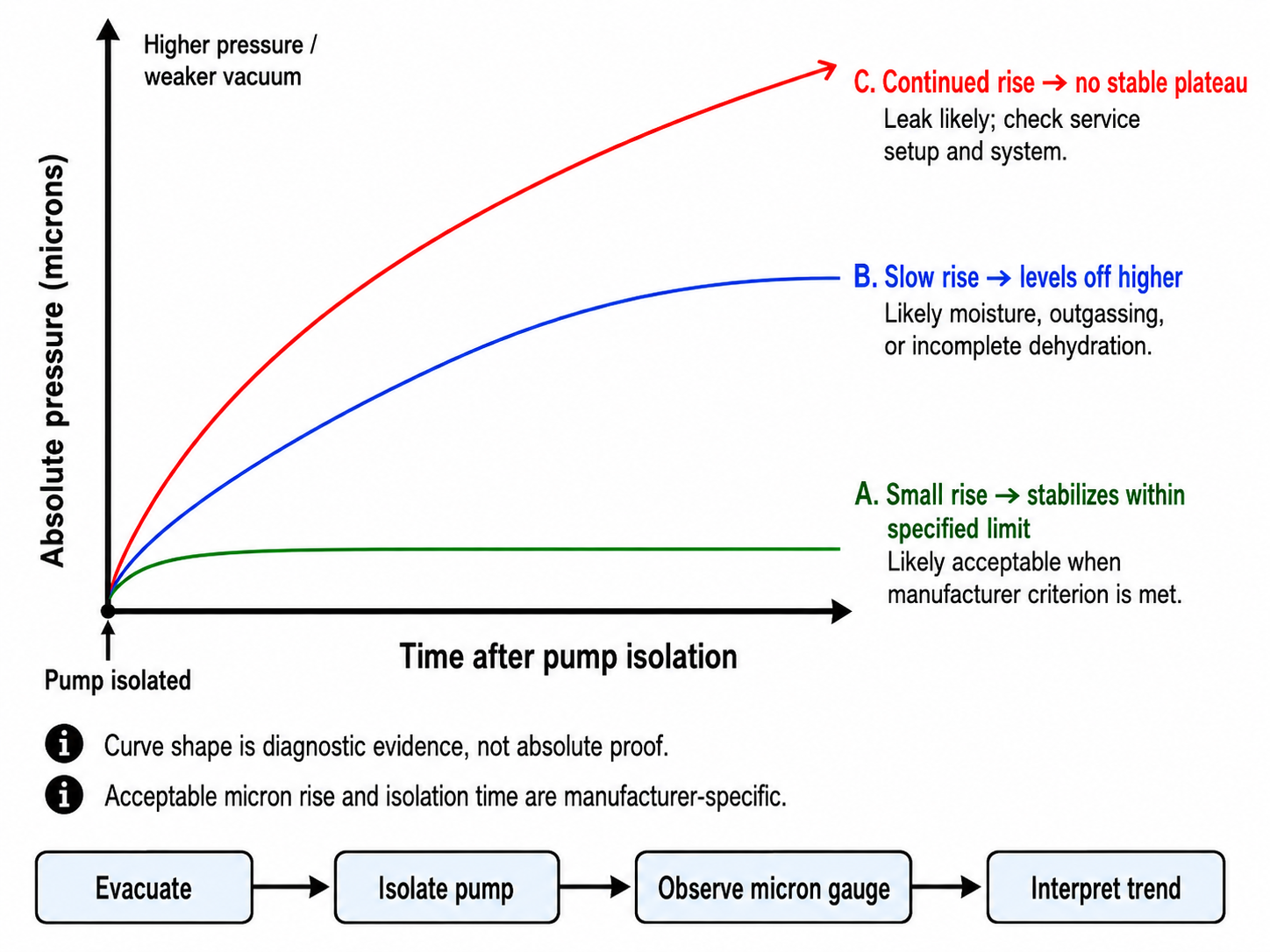
Figure 5.8.1 – Vacuum decay interpretation after the vacuum pump is isolated.
AI-generated instructional figure: It may contain visual inaccuracies. Use the accompanying lesson text and cited authoritative sources to verify technical and regulatory details.
EPA 608 Exam Focus
What Students Must Remember
- A standing vacuum / decay test is performed after the vacuum pump is isolated.
- Keep the micron gauge on the system side of the isolation point.
- A rising micron value means:
- Absolute pressure is rising.
- Vacuum is becoming shallower.
- A small rise that stabilizes within the specified limit is consistent with a sufficiently dry and tight system.
- A slow rise that eventually levels off higher commonly suggests:
- Moisture.
- Outgassing.
- Incomplete dehydration.
- A continuous rise that does not level off commonly suggests a leak.
- Decay-curve shape is a diagnostic clue, not absolute proof.
- Check service hoses, fittings, tools, and gauge connections before assuming the refrigeration system itself leaks.
- There is no universal EPA standing-vacuum isolation time for all systems.
- The acceptable rise and hold time normally come from the manufacturer or service specification.
- Do not accept only an instantaneous low micron reading while the pump is running.
- A dry-nitrogen break helps remove moisture during repeated evacuation.
- Dry nitrogen helps dilute and sweep water vapor; it should not simply be described as “absorbing all moisture.”
- Nitrogen must be removed by final evacuation before charging.
- Triple evacuation consists of three evacuation cycles, commonly separated by dry-nitrogen breaks.
- Triple evacuation is a dehydration technique, not a universal EPA-mandated procedure for every system.
- Do not memorize one universal triple-evacuation micron sequence or nitrogen pressure.
- Triple evacuation does not repair leaks.
- A vacuum pump is primarily an evacuation/dehydration tool, not a general self-contained refrigerant recovery machine.
- EPA’s current Type I test topics include a special system-dependent small-appliance recovery example in which a vacuum pump may be used with a non-pressurized recovery container.
- Do not use a vacuum pump as an excuse to intentionally vent refrigerant through its exhaust.
- The detailed EPA refrigerant-recovery evacuation table is covered in Section 5.9.
High-Priority Vacuum-Decay Memory Aid
SMALL RISE
→ stabilizes low
→ likely dry / tight if within manufacturer limit
SLOW RISE
→ eventually levels off higher
→ moisture / outgassing likely
CONTINUED RISE
→ no plateau
→ leak likely
Triple-Evacuation Memory Aid
EVACUATE
→ DRY NITROGEN BREAK
→ EVACUATE
→ DRY NITROGEN BREAK
→ FINAL EVACUATION
→ STANDING VACUUM TEST
Tool Memory Aid
RECOVERY EQUIPMENT
→ captures refrigerant
VACUUM PUMP
→ removes air and moisture vapor
with the specific Type I system-dependent exception discussed above.
Typical Exam Question Patterns
Students may be asked to:
- Identify why the pump must be isolated during a standing vacuum test.
- Interpret a slow micron rise that levels off.
- Interpret a continuing micron rise.
- Recognize that some initial pressure rise after isolation can be normal.
- Explain why decay-test time and allowable rise are manufacturer-specific.
- Identify why the service setup itself should be checked for leaks.
- Explain the purpose of a dry-nitrogen break.
- Explain why nitrogen must be removed before charging.
- Identify the general sequence of triple evacuation.
- Recognize that triple evacuation does not repair a leak.
- Distinguish a vacuum pump from a recovery machine.
- Recognize the special Type I passive-recovery use of a vacuum pump with a non-pressurized recovery container.
High-Priority Comparison Table
| Exam Clue | Correct Concept |
|---|---|
| Pump isolated; micron value monitored | Standing vacuum / decay test |
| Small rise then low stable plateau | Likely acceptable if manufacturer criterion is met |
| Slow rise then higher plateau | Likely moisture / outgassing / incomplete dehydration |
| Continuous rise with no plateau | Leak likely |
| One universal hold time | No — follow manufacturer / service specification |
| Break deep vacuum during dehydration | Dry nitrogen |
| Purpose of nitrogen break | Dilute / sweep water vapor and aid dehydration |
| Nitrogen before charging | Must be removed by evacuation |
| Three evacuation cycles | Triple evacuation |
| Triple evacuation fixes leak | No |
| Deep-vacuum pump | Evacuation / dehydration tool |
| General refrigerant capture | Recovery equipment / approved recovery arrangement |
| Type I passive special case | Vacuum pump may be part of system-dependent recovery with non-pressurized container |
Common Mistakes and Confusing Points
Mistake 1: Calling Any Micron Rise a Leak
Some rise can result from:
- Equalization.
- Moisture.
- Outgassing.
- Temperature change.
Look at the trend, not only the fact that the value increased.
Mistake 2: Treating a Slow Rise as Proof of Moisture
A slow rise is consistent with moisture or outgassing, but other factors can affect the curve.
Use the decay pattern together with:
- System history.
- Gauge condition.
- Service setup.
- Manufacturer criterion.
Mistake 3: Leaving the Vacuum Pump Running During the Decay Test
A running pump can continue removing gas and hide the system’s true behavior.
Isolate it first.
Mistake 4: Isolating the Micron Gauge With the Pump
The gauge must remain connected to the system being evaluated.
Otherwise, the technician may be measuring:
- Hose volume.
- Pump-side volume.
- Nothing representative of the system.
Mistake 5: Using One Universal Isolation Time
There is no single standing-vacuum hold time for every system.
Use the applicable manufacturer procedure.
Mistake 6: Treating 500 Microns as a Universal Decay-Test Pass Limit
A target pull-down and an acceptable isolated rise are separate criteria.
The manufacturer may specify:
- Evacuation target.
- Isolation time.
- Allowable rise.
Mistake 7: Saying Nitrogen “Absorbs” All Moisture
Dry nitrogen mainly helps:
- Dilute water vapor.
- Sweep gases.
- Break the vacuum.
Vacuum still provides the main mechanism for removing vapor.
Mistake 8: Leaving Nitrogen in the System
Nitrogen is a noncondensable.
It must be removed before final charging.
Mistake 9: Using Oxygen or Compressed Air for a Nitrogen Break
Use dry nitrogen and proper pressure regulation.
Detailed nitrogen safety is covered in Module 6.
Mistake 10: Performing Triple Evacuation Repeatedly on a Leaking System
Triple evacuation does not seal a leak.
Repair the leak first.
Mistake 11: Memorizing One Manufacturer’s Triple-Evacuation Numbers as an EPA Rule
Manufacturer procedures differ.
Learn the sequence and purpose, then follow the actual service instructions.
Mistake 12: Saying a Vacuum Pump Can Never Be Part of Refrigerant Recovery
That statement is too broad.
EPA Type I test topics include a specialized system-dependent setup using a vacuum pump with a non-pressurized recovery container.
The vacuum pump still is not a general self-contained recovery machine.
Mistake 13: Using a Vacuum Pump to Intentionally Exhaust Refrigerant
The special Type I recovery arrangement captures refrigerant in a recovery container.
It is not permission to discharge refrigerant from the vacuum-pump exhaust.
Concept-Check Questions
Question 1
What is the main purpose of isolating the vacuum pump during a standing vacuum test?
A. To evaluate how the refrigeration system holds vacuum without the pump continuously removing gas
B. To increase the refrigerant charge in the system
C. To make the micron gauge read atmospheric pressure
D. To convert nitrogen into refrigerant
Question 2
After the pump is isolated, the micron value rises slowly and then levels off at a pressure above the manufacturer’s acceptable limit. What does this pattern most strongly suggest?
A. The system is automatically ready to charge.
B. Moisture, outgassing, contamination, or incomplete dehydration may remain.
C. The recovery cylinder is overfilled.
D. The vacuum pump is functioning as a reclaim machine.
Question 3
After isolation, the micron value continues to rise without showing a stable plateau. What should the technician suspect first?
A. A system or service-setup leak
B. Perfect dehydration
C. Excessive subcooling
D. A full recovery cylinder
Question 4
Which statement about standing-vacuum isolation time is correct?
A. EPA requires exactly 5 minutes for every appliance.
B. EPA requires exactly 10 minutes for every appliance.
C. The required time and acceptable rise normally depend on the manufacturer or service specification.
D. Isolation time does not matter because only the lowest instantaneous micron reading is important.
Question 5
What is the main purpose of introducing dry nitrogen between evacuation cycles?
A. To dilute and sweep water vapor and help the next evacuation remove moisture
B. To replace the refrigerant charge permanently
C. To lubricate the compressor
D. To increase the system’s operating head pressure
Question 6
Which sequence best represents the general concept of triple evacuation?
A. Evacuate → nitrogen break → evacuate → nitrogen break → final evacuation
B. Recover refrigerant → vent refrigerant → charge refrigerant → evacuate
C. Pressurize with oxygen → evacuate once → charge immediately
D. Evacuate → add refrigerant → evacuate → add refrigerant
Question 7
Which statement about a vacuum pump and refrigerant recovery is most accurate?
A. A vacuum pump is always identical to a self-contained recovery machine.
B. A vacuum pump is primarily an evacuation/dehydration tool, although EPA Type I guidance includes a special system-dependent recovery arrangement that can use a vacuum pump with a non-pressurized recovery container.
C. A vacuum pump may always exhaust refrigerant directly to atmosphere.
D. A recovery machine is used only to remove water vapor.
Question 8
A system fails a standing vacuum test because pressure continues rising in a pattern consistent with a leak. What should be done before attempting final evacuation again?
A. Add more nitrogen permanently to the operating charge.
B. Run the vacuum pump indefinitely without checking anything else.
C. Locate and repair the leak, then repeat the evacuation and standing-vacuum test.
D. Charge the system immediately because the vacuum pump already reached a low micron reading.
Answers and detailed explanations will be provided in
5.12 - Answers and Explanations.md.
Section Summary
A standing vacuum test evaluates the system after the vacuum pump is isolated.
The key sequence is:
Evacuate
→ isolate pump
→ keep micron gauge on system
→ observe pressure rise
→ interpret trend
Typical qualitative patterns are:
Small rise
→ stabilizes low
→ likely acceptable if within specified criterion
Slow rise
→ levels off higher
→ moisture / outgassing / incomplete dehydration likely
Continuous rise
→ no plateau
→ leak likely
The isolation time and acceptable pressure rise are:
manufacturer / service specification dependent
not one universal EPA number.
When dehydration is difficult:
Evacuation
→ dry-nitrogen break
→ evacuation
→ dry-nitrogen break
→ final evacuation
→ standing vacuum test
can be used as a triple-evacuation process.
Dry nitrogen helps dilute and sweep water vapor, but it must be removed before the system is charged.
Finally:
Vacuum pump
→ evacuation / dehydration
is different from:
Recovery equipment
→ refrigerant capture
while recognizing the specific Type I system-dependent small-appliance context in which a vacuum pump may be used as part of a recovery arrangement with a non-pressurized recovery container.
The next section returns to the current federal service-practice requirements and the appliance-specific evacuation levels required before equipment is opened or disposed of.
See Section 5.9 - Service-Practice Requirements and Exceptions.
References
Current EPA and Regulatory Sources
-
U.S. Environmental Protection Agency, Section 608 Test Topics, accessed August 9, 2026.
-
U.S. Environmental Protection Agency, Stationary Refrigeration - Prohibition on Venting Refrigerants, accessed August 9, 2026.
-
U.S. Environmental Protection Agency, Stationary Refrigeration Service Practice Requirements, accessed August 9, 2026.
-
Electronic Code of Federal Regulations, 40 CFR § 82.154 — Prohibitions, accessed August 9, 2026.
Manufacturer Technical References
-
Fieldpiece Instruments, Want to Pull a Better Vacuum? Start by Learning How to Correctly Use Your Vacuum Gauge, accessed August 9, 2026.
-
Appion Tools, Fast Evacuation Series - Successful Evacuation, accessed August 9, 2026.
-
Fieldpiece Instruments, VP67 / VP87 / VPX7 Vacuum Pump Operator’s Manual, current online manual, triple-evacuation, pump-isolation, micron-gauge, and vacuum-pump-use guidance, accessed August 9, 2026.
-
Copeland, Principles of Cleaning Refrigeration Systems, Application Engineering Bulletin AE24-1105, triple-evacuation and dry-nitrogen-break guidance, accessed August 9, 2026.
-
Carrier, Installation Instructions, system evacuation guidance including dry-nitrogen vacuum breaks and final evacuation before charging, accessed August 9, 2026.